Showing posts with label nuns. Show all posts

Wednesday, 27 March 2013

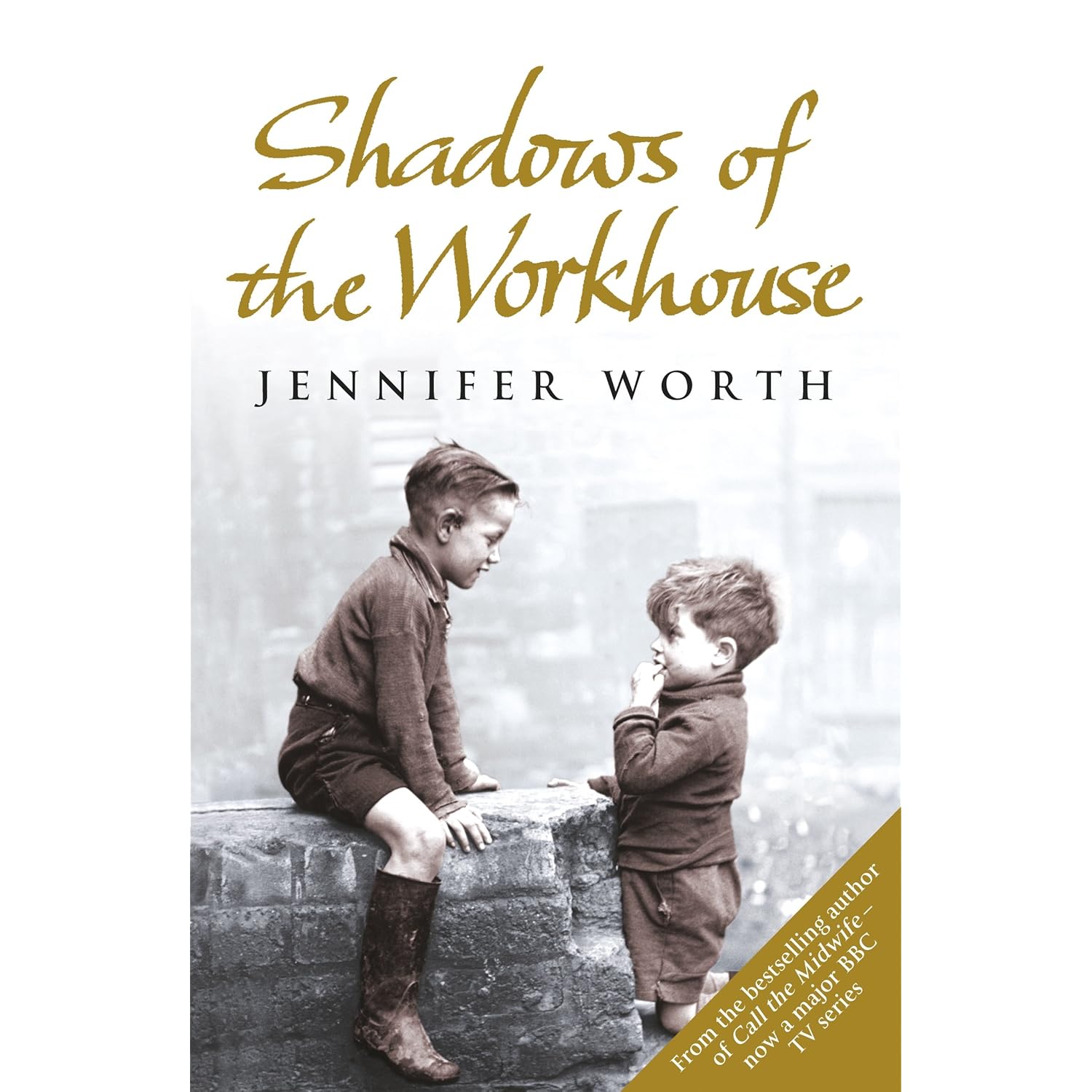
Shadows Of The Workhouse by Jennifer Worth


As everyone knows, I am obsessed with nuns and midwives. Are there two more awesome types of people than nuns and midwives? The answer is no. I am addicted to the tv series Call the Midwife and I basically inhaled the book  last year. 

If Call the Midwife is a massive love letter to the NHS, then Shadows of the Workhouse reminds us how much we owe to the Welfare State as a whole. The book is in 3 parts and the first and third are about the effect of the workhouse on the lives of working class people in the first half of the 20th century.It’s so shocking to me that the workhouse existed so recently that my great-grandparents must have lived in fear of the workhouse, that my grandparents could have been taken there as children. We are so lucky that this could never happen to us. 

I don’t know if people outside the UK know about the Workhouse (although everyone has seen Oliver so I guess they know what it is?). The workhouse was pretty much the only safety net for the elderly, orphaned, disabled, ill and unemployed in Victorian and early 20th century Britain. The workhouse was tough – the inmates had to do tough physical labour and the conditions were so crowded that disease spread quickly and easily, killing huge numbers with each outbreak. The great tragedy of the workhouse was that families would be broken up as soon as they arrived: adults were separated from children, male inmates from female. Once they had entered the workhouse, families knew they were unlikely to see each other again. The fear of the workhouse and the shame of having to enter it led people to take their own lives rather than go and the fear continued long after the last workhouses closed. 

SO, the actual book!

Part one : The Children of the Workhouse.

This part is the most upsetting part of the book. I read the first few chapters late one night and I felt physically sick and cried so much I had to spend ages cheering myself up before I could sleep. This bit tells us the story of three people she knew who had been in the workhouse together: Fred and Peggy (who were brother and sister) and their friend Jane. This section is pretty tough going. I find it incredible that this type of thing happened less than 100 years ago. 

Warning: there is incest and a very graphic description of a child being whipped.

This bit is what I imagine those misery lit/true life stories are like.

Part Two: The Trial of Sister Monica Joan.

Everyone’s favourite crazy old nun has been caught shoplifting and goes on trial. Do I need to say more? This section also tells us about Sister Monica Joan’s background and how she left her rich and privileged family to become a nurse and then a nun. 
“Were you a suffragette?”I asked. 
“Bah! Suffragettes. I’ve no time for suffragettes. They made the biggest mistake in history. They went for equality. They should have gone for power!”
well?

Part Three: The Old Soldier

This section is about an old man that Jenny befriends and he tells her stories about his life and his time as a soldier. Pretty straightforward. 

How do I sum up? I can't sum it up without making it sound really horrific! It's pretty downbeat and depressing in places and there is no midwifery(!). But the book is incredibly moving and it shows us just how lucky we are to live now, even if we do have a government of EVIL. 

p.s. still bad at the review thing a waaay behind. oh well. 

Sunday, 25 March 2012

Book Review: Call the Midwife

from BBC 


If you've been living in a hole in the ground (or another country...or you just aren't that interested in nuns and/or midwifery) you may not be aware of the recent TV series, Call the Midwife. It was about a group of nursing nuns and midwives in the East End in the 1950s - i.e. perfect Frances telly. They couldn't have come up with a tv show I would enjoy more.  Luckily I got the book for my birthday, so the fun midwife-nun fun didn't have to end! 

Call the Midwife is the first of Jennifer Worth’s three memoirs about working as a midwife in the East End in the 1950s. If you watched the series, you’ll recognise several of the women and the stories.  The main difference in the book is that Jenny is the midwife in all the cases, the other nuns and midwives are all more secondary characters, while in the tv version they were more developed as characters in their own right. This is no problem in a memoir, but I can see why they changed it for the tv version.

Highlights include Len and Conchita Warren, a couple who can’t talk to each other without their children there to interpret (she only speaks Spanish and he only speaks English) but who have their 24th and 25th babies during the book. There is wonderfully mad Nun Sister Monica Joan, who greets Jenny when she first arrives at Nonnatus House: “This is a unique time to be alive. So exciting. The little angels clap their wings.” There are three (THREE) chapters dubiously titled"Of Mixed Descent", which deal with unexpectedly-black babies, and the reactions of their parents. This book gives you exactly what you want from a book about a midwife in the East End - stories about amazing women in difficult situations, lots of birth, moments that make you cringe and moments that move you to tears. There are instances where she describes real deprivation - people living in flats that have been condemned, people using newspaper instead of bedding, small children left to run around with nothing on their bottom half so as to save on washing. This aspect made it much grittier than the tv version which had a blitz spirit, "keep calm and carry on" attitude to squalor.

The part of the book that made the deepest impression on me had nothing to do with birth. It is the story of a woman who ended up in the workhouse, separated from her children who she would never see again. When I read this chapter I was so angry that I was actually shaking. Everyone has heard of the workhouse but we associate it with Dickensian London, not the 20th Century. This woman had sold everything she owned, even her teeth, and the blankets off the bed. Her poverty was such that she couldn't afford a burial when her baby died, instead she had to put him in the river, in a box weighed down with rocks. After this, she had no choice but to go to the workhouse: 
The children were not particularly unhappy as yet; in fact, it seemed something of an adventure to them, creeping out in the dead of night and making their way along dark roads. Only their mother was crying, because only she knew the dreadful truth: that the family would be separated once they entered the workhouse gates. She could not bring herself to tell the children, she hesitated before ringing the fateful bell. But her youngest child, a boy of nearly three, started coughing, so she pulled the bell resolutely...They cuddled together on the sweet-smelling hay, and the children fell asleep at once. Only the mother lay awake, her arms around her children, until dawn. Her heart was breaking. She knew that this would be the last time she would be allowed to sleep with her children. 
Reading this book has made me realise just how important the NHS and the Welfare State are... and how much contraception has changed all our lives! To put it into context for you: "In the late 1950s we had eighty to a hundred deliveries a month on our books. In 1963[i.e. when the Pill became available] the number had dropped to four or five a month." The fact that women are STILL having to fight for access to free healthcare and contraception is terrifying. But I really need to write about the Handmaid's Tale if I'm going to start talking about that!