Love is no hot-house flower, but a wild plant, born of wet night, born of
an hour of sunshine; sprung from wild seed, blown along the road by a wild
wind. A wild plant that, when it blooms by chance in within the hedge of our
gardens, we call a flower; and when it blooms outside we call a weed; but,
flower or weed, whose scent and colour are always wild! And further – the facts and figures of their
own lives being against the perception of truth – it was not generally recognised
by Forsytes that, where, this wild plant springs, men and women are but moths
around the pale, flame-like blossom.

Showing posts with label 50 books. Show all posts
Showing posts with label 50 books. Show all posts
Monday, 23 September 2013
Wednesday, 18 September 2013
Persepolis
 |
| Don't the colours look nice together? I only read books that match my decor. |
Laura
lent me this when she came on our little holiday in my house (about a million
months ago now...bad blogger). I like to think that my devious plan, involving
taking her to charity shops so she bought more books and couldn’t take ALL her
books home, was the reason she lent it to me. But it might have been her plan
to lend me them all along.
First of
all: Persepolis is super awesome. (The
second of all, I’m glad I’m writing this down so I don’t have to try and say
Persepolis. I said it in my mangled way and my Archaeologist father went “It’s
Persepolis” so fast that I’ve no idea how he said it.)
Persepolis
is a graphic novel by Marjane Strapi about her childhood in Iran and then her
return to Iran after spending some of her teens in Austria. Before reading it
by knowledge about Iran was this:
1) There was some kind of Cultural/Islamic revolution in the 70s
2) Comedian Shappi Khorsandi is Iranian and her family moved to Britian in the 70s because her father wrote a satirical poem
3) Iran used to be called Persia
Have you
been blown away by my knowledge?
The
first awesome thing about this book is that it’s really informative. After
reading this I actually have some idea of Iran’s recent history, including the
part that Britain played (non-spoiler: it was not good). The history of the
Middle East is SO confusing and Persepolis describes it in a way that I could
understand (I sound really thick so far...).
But the
best thing about Persepolis is that it is a personal story. It cuts through all
the distance that news reports give and the way that they can “other” people. News
never focuses on people in a way that you can relate to them. Through Marjane’s
eyes, we can see her experiencing the Iranian Revolution alongside being a teenager. It reminded me of how people find the term "first world problems" offensive because people all over the world get annoyed if their wifi is down or whatever. People are just people and they still live their day-to-day lives, even if their day-to day lives involve having to wear the veil. We can all too easily look at women who
live under oppressive regimes and
assume we know everything about them. That there is nothing in their lives beyond their limited freedoms. We rarely seek out their voices or stories. Not only does Persepolis do this but it's really engaging and funny.

So even
if it hadn’t been so interesting and entertaining, I would have liked it just
because it helped to make me less ignorant!
Sunday, 18 August 2013
The Masque of Anarchy - Percy Bysshe Shelley
 |
| from the Manchester Archives Flickr photoset
This is
not technically a book but a poem. It’s a long poem, though, and I’m sure
someone has sold it as a little book on its own. Plus, this is my challenge and
I’m cheating because I'm really behind. So there.
I wasn’t
going to post this at all but then I realised that this week it was the anniversary of the Peterloo Massacre – the event which inspired the
poem – and so it seemed pretty perfect.
What
was the Peterloo Massacre?
*puts on
Open University hat*
The
country had experienced famine and high unemployment in the years following the
Napoleonic Wars and the introduction of the Corn Laws. This suffering was
compounded by a lack of parliamentary representation for working people,
particularly in industrial areas like Manchester, where they were very few
members of parliament and even fewer voters. Spurred on by their extreme
poverty and lack of voice or help from the government, radical politics gained
popularity.
On the
16th August 1819, the Manchester Patriotic Union had organised a
demonstration for parliamentary reform with an address by leading radical Henry
Hunt. The protesters came to Peter's Field from all over Manchester and the surrounding areas –
one eyewitness estimated that the crowd equalled half the population of Manchester.
Because previous meetings of working people had been criticised and mocked for
their shabby appearance and disorderly conduct, the Peter’s Field protesters had
made efforts to be particularly well turned out and none of them were armed. Despite the peaceful nature of
the demonstration, local magistrates wanted to arrest Hunt and they called on
the Army to arrest him and disperse the crowd. The cavalry went in with their
sabres drawn and many in the crowd were unable to get away. In the chaos that
followed, 400-600 people were injured and 15 killed.
Why
should we care now?
*puts on
socialist ribbon*
The
Peterloo Massacre lead to the founding of the Manchester Guardian (which became
the modern-day Guardian newspaper) and was a really significant moment in
radical and working class politics, helping to bring about the Trades Union
movement.
THE
ACTUAL POEM
*puts on
English Graduate garment of some description*
Shelley
was in Italy at the time but when he heard about the massacre he was driven to
write the Masque of Anarchy, considered by many to be one of the greatest
political poems in the English language. I think it’s pretty good. Go and read
it.
Rise like Lions after slumber
In unvanquishable number,
Shake your chains to earth like dew
Which in sleep had fallen on you -
Ye are many - they are few..
How
excellent is that? I want everyone to read it and go, “YES! WE WILL RISE LIKE LIONS! WE ARE MANY AND THEY ARE FEW! LET’S SAVE THE NHS FROM THE TORY WANKBAGS!”
*takes off weird extra garments and gets back to drawing tattoos on self in biro* |
Monday, 22 July 2013
Feminism is for Everybody: Passionate Politics - bell hooks

Feminist politics aims to end domination to free us to be who we are -- to live lives where we love justice, where we can live in peace. Feminism is for Everybody
I have
finally finished this. It’s a ridiculously short book to have taken me so long but
I had to read it short bursts to stop myself copying it all out into my
notebook. I need everyone I know to read this so that we can discuss how
wonderful it is and then make bell hooks our queen. I don’t think she’d be down
with being a queen, but I’m sure we could work something out.
I think
bell hooks is the only feminist author that I’ve never seen anyone criticise
and bad-mouth. Now I know why.
I don’t even know what to say about it. JUST
READ IT.
I guess
that won’t do.
Feminism
is a movement to end sexism, sexist exploitation, and oppression
bell
hooks wrote Feminism is for Everybody because she wished she had a book she
could give to people when they said things like “I’m not a feminist but....”
and clearly miss the point of what feminism and the feminist movement are all
about. She wanted it to be an accessible book for people outside academia, one
that simply explains all of the issues around feminism, and how it intersects
with race and class and religion etc. without alienating people with
complicated terminology. I think she does a pretty good job of explaining all
the terms that she uses and making it accessible for all readers*.
Where
Feminism is for Everybody is different from traditional introduction to
feminism books is that it’s not all about pay gaps and white girls. I've borrowed
a copy of The Equality Illusion by Kat Banyard and (as far as I can tell from
the back) it seems to be about pay gaps and unequal numbers of women in top
jobs in the city. While this is obviously important stuff, it seems to me, and
bell hooks, that this is really just tinkering with a system that is inherently
wrong. The system is unfairly stacked in favour of white men, not because it is
broken, but because it is working exactly as it was designed. Helping some women, inevitably privileged white women, will not further the cause of feminism for all women. This book is about how feminism is truly for, and will benefit, everybody whether they are male, female, straight, queer, working-class, middle-class, white, non-white etc. And most of all, how we need to change our society because it is built on domination and oppression. But rather than depress me about how much oppression their is in the world, this book has made me feel excited to imagine a world built on justice and love respect.
Who's coming to smash this white supremacist capitalist patriarchy with me?
Because my review made NO SENSE here are some quotes:
We do know that patriarchal masculinity encourages men to be pathologically narcissistic, infantile, and psychologically dependent on the privileges (however relative) that they receive simply for having been born male. Many men feel that their lives are being threatened if these privileges are taken away, as they have structured no meaningful core identity.
(on feminism being associated with hatred and anger:)
In actuality we should have been spreading the word that feminism would make it possible for men and women to know love. We know that now.
Sexually conservative feminists, gay and straight, found and continue to find consensual rituals of domination and submission inappropriate and see them as betraying feminist ideals of freedom. Their absolute judgement, their refusal to respect the rights of all women to choose the sexual practice they find most fulfilling, is in actuality the stance which most undermines the feminist movement.
If any female feels she needs anything beyond herself to legitimate and validate her existence, she is already giving away her power to be self-defining, her agency.
When we accept that true love is rooted in recognition and acceptance, that love combines acknowledgement, care, responsibility, commitment, and knowledge, we understand that there can be no love without justice. With that awareness comes the understanding that love has the power to transform us, giving us the strength to oppose domination. To choose feminist politics, then, is the choice to love.
*I am a
very bad judge of this because I love reading anything with words like “Diaspora”
or “hegemony” and everything seems beautifully simple after trying to decipher
Judith Butler.
Tuesday, 30 April 2013
Blood Sisters by Melanie Clegg

I
haven’t forgotten how to read! I just keep watching Game of Thrones.
Last week
I finished Blood Sisters by Melanie Clegg (known as Madame Guillotine on
twitter and her blog). I don’t know why it’s taken me so long to write this
review. Book reviews are hard because I just want to go I LIKED IT! READ IT! This one is definitely more of a record than a review...
Blood
Sisters is about 3 sisters during the French revolution: twins Lucrèce and
Cassandre, and their more rebellious younger sister Adélaïde. The book moves from
sister to sister as they marry other aristocrats and experience the Reign of
Terror first hand. The book is basically romance and gore... and a fair amount
of guillotining. I read Blood Sisters in 2 days, thinking “I’ll just read a
litttttle bit more and then I’ll do something useful.” It is so readable and
engaging and thankfully free of the glaringly obvious historical inaccuracies! You
can tell that the author has spent years researching this topic and it really
makes a difference.
I’m now
off to read lots and lots of short books to make up for being about 10 behind
on this challenge... oops.
Friday, 5 April 2013
Why Be Happy When You Could Be Normal? by Jeannette Winterson

When I
was a pretentious teenager who had just stolen the spare tv to watch inappropriate tv secretly in her room I used to watch a lot of Newsnight Review. I really don’t know
why because I’d never read the books or seen the films they were talking about.
I just liked it because it made me feel clever. The main things I remember
about it are Miranda
Sawyer’s hair (I drew diagrams in my diary) and Jeanette Winterson.
The
Jeanette Winterson I saw on that programme was the Jeanette Winterson that
stayed in my imagination for a long time. She was intense and argumentative and
she seemed like a twitchy little squirrel. I was a little scared of her.
Then I read Oranges Are Not The Only
Fruit as a teenager (like everyone does) and I can’t say I remember much
about it except for the foreword in my edition where she talked about being
poor and glad the coloured knickers were the fashion because she couldn’t
afford a separate whites wash at the laundrette. This didn’t tally at all with my idea of her as scary and twitching and severe. For a long time I left
it there. Jeannette Winterson was the embodiment of scary and serious feminism
that I didn't understand and found intimidating and severe.
I thought of Winterson as very severe and intimidating (aka. someone who would definitely think I was an idiot) for a long time. It faded a bit once I'd learned more about feminism but I never really lost the idea that she was serious and would hate me! But then I watched this tv programme she did about
Shall I
talk about the book now?
Why Be
Happy When You Could Be Normal? Is the best title. Oranges Are Not The Only Fruit
was pretty good but this is better. How could anyone resist a book with that
title and a cute child with a beach ball on the cover? The title is like a self-help book gone-wrong and it feels like a magical self-help book, a book that demands to be re-read regularly. I want to get it back from my mother (who demanded to read it as soon as possible) and underline huge sections.
I still haven't talked about what's actually IN the book. It's a book about loving books and being adopted and being gay and mental illness. Jeanette lives in a house where "HE WILL MELT THY BOWELS LIKE WAX" is on the back of the loo door and her mother's church starves her when she has a relationship with another girls. So much of what happens to Jeanette, at least at the start of the book, is awful and yet I mostly remember laughing.
Go and read it.
p.s. I am totally mentally adding it to my teenage girl pack
Wednesday, 27 March 2013
Shadows Of The Workhouse by Jennifer Worth
Labels:
50 books,
books,
Call The Midwife,
nuns
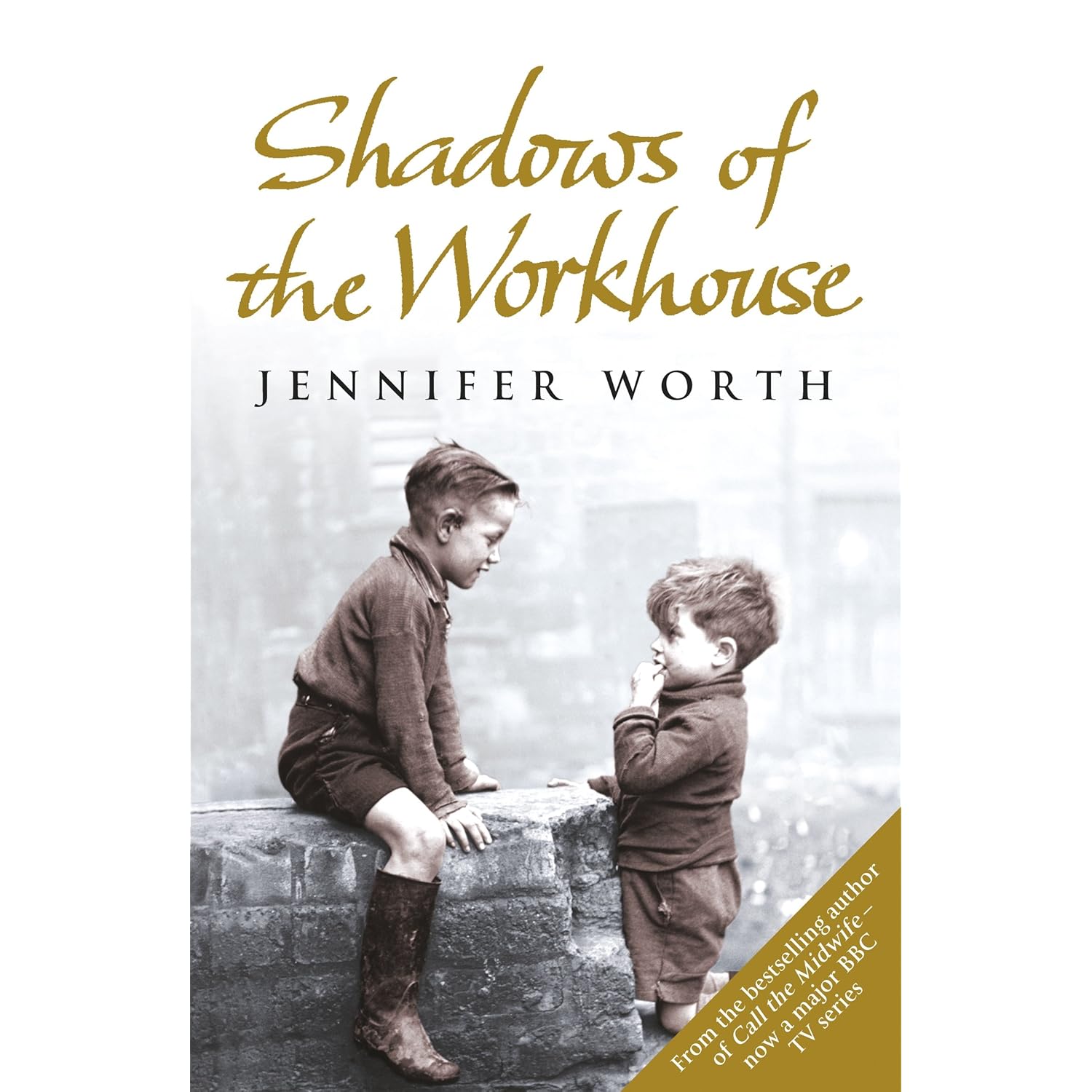
As
everyone knows, I am obsessed with nuns and midwives. Are there two more
awesome types of people than nuns and midwives? The answer is no. I am addicted
to the tv series Call the Midwife and I basically inhaled the book last year.
If Call
the Midwife is a massive love letter to the NHS, then Shadows of the Workhouse
reminds us how much we owe to the Welfare State as a whole. The book is in 3
parts and the first and third are about the effect of the workhouse on the
lives of working class people in the first half of the 20th century.It’s so shocking to me that the workhouse existed so recently that my great-grandparents must have lived in fear of the workhouse, that my grandparents could have been taken there as children. We are so lucky that this could never happen to us.
I don’t
know if people outside the UK know about the Workhouse (although everyone has seen Oliver
so I guess they know what it is?). The workhouse was pretty much the only
safety net for the elderly, orphaned, disabled, ill and unemployed in Victorian
and early 20th century Britain. The workhouse was tough – the inmates
had to do tough physical labour and the conditions were so crowded that disease
spread quickly and easily, killing huge numbers with each outbreak. The great tragedy
of the workhouse was that families would be broken up as soon as they arrived:
adults were separated from children, male inmates from female. Once they had
entered the workhouse, families knew they were unlikely to see each other again.
The fear of the workhouse and the shame of having to enter it led people to
take their own lives rather than go and the fear continued long after the last
workhouses closed.
SO, the
actual book!
Part one
: The Children of the Workhouse.
This
part is the most upsetting part of the book. I read the first few chapters late
one night and I felt physically sick and cried so much I had to spend ages
cheering myself up before I could sleep. This bit tells us the story of
three people she knew who had been in the workhouse together: Fred and Peggy
(who were brother and sister) and their friend Jane. This section is pretty
tough going. I find it incredible that this
type of thing happened less than 100 years ago.
Warning: there is incest and a very graphic description of a child being whipped.
Warning: there is incest and a very graphic description of a child being whipped.
This bit
is what I imagine those misery lit/true life stories are like.
Part Two:
The Trial of Sister Monica Joan.
Everyone’s
favourite crazy old nun has been caught shoplifting and goes on trial. Do I
need to say more? This section also tells us about Sister Monica Joan’s background
and how she left her rich and privileged family to become a nurse and then a
nun.
“Were you a suffragette?”I asked.
“Bah! Suffragettes. I’ve no time for suffragettes. They made the biggest mistake in history. They went for equality. They should have gone for power!”
 |
| well? |
Part
Three: The Old Soldier
This
section is about an old man that Jenny befriends and he tells her stories about
his life and his time as a soldier. Pretty straightforward.
How do I
sum up? I can't sum it up without making it sound really horrific! It's pretty downbeat and depressing in places and there is no midwifery(!). But the book is incredibly moving and it shows us just how lucky we are to live now, even if we do have a government of EVIL.
p.s. still bad at the review thing a waaay behind. oh well.
p.s. still bad at the review thing a waaay behind. oh well.
Monday, 11 March 2013
A Treacherous Likeness
 |
| I take all pictures on my bed |
The very first thing to say about this book is just how gorgeous it is. My dreadful picture does not do justice at all to the gorgeous cover, but the background is like beautiful wallpaper and the ornate frame is all embossed. And just look at the endpapers:
I've been reading quite a lot on kindle recently and it's great when you can get a book for 20p* or if you MUST READ IT NOW but you don't get endpapers. Lovely endpapers.
A Treacherous Likeness is the third of Lynn Shepherd’s novels where she weaves a mystery story through an existing novel or novels. The first of these is Murder and Mansfield Park, obviously inspired by Austen’s novel, and the second Tom-All-Alone’s, which uses Bleak House as its starting point. For A Treacherous Likeness, Lynn Shepherd has taken her inspiration from the life of Percy Bysshe Shelley and the mysteries of his life, which include the suicide of his first wife and an incident when he claimed someone tried to kill him.
 |
A Treacherous Likeness is the third of Lynn Shepherd’s novels where she weaves a mystery story through an existing novel or novels. The first of these is Murder and Mansfield Park, obviously inspired by Austen’s novel, and the second Tom-All-Alone’s, which uses Bleak House as its starting point. For A Treacherous Likeness, Lynn Shepherd has taken her inspiration from the life of Percy Bysshe Shelley and the mysteries of his life, which include the suicide of his first wife and an incident when he claimed someone tried to kill him.
A Treacherous Likeness begins in 1850, immediately after Tom-All-Alone's when young detective Charles Maddox is employed by Sir Percy Shelley, the only surviving child of the Shelleys, to investigate a case of blackmail. This blackmail case leads Charles to uncover long buried secrets of the Shelleys and challenges the romanticised view of Shelley that Sir Percy and Lady Shelley have been carefully cultivating.
Lynn Shepherd has filled the gaps in Shelley's life, offering explanations for some of the mysteries and using existing letters and facts to build up this fiction. This book is so well researched that nothing you read about Shelley will directly contradict the events of the novel. So often books with continue or engage with other works, or with provide fictionalised accounts of real people, feel trashy and are often very badly written (I'm looking at you, Mr Darcy Takes A Wife) but Lynn Shepherd's books are the opposite of that. Lynn Shepherd's books are joyful book-nerdery rather than tragic fanfiction.
As with Tom-All-Alone's, you don't need to know anything about the source material for this to be interesting, but it is more fun when you know the references and can compare the novel with the original. If you are familiar with the lives of the Shelleys, Claire Clairmont, and WIlliam Godwin you must be prepared for them to be portrayed in ways that you may not like, for people that you admire to be portrayed as selfish, unhinged and possibly evil. For this reason I am very happy that Mary Wollstonecraft does not figure in this novel at all because I really couldn't deal with her looking evil! It is incredible to think how young all these people were -- Shelley died when he was only 29 and Mary Shelley was 17 when she had Shelley's first child. And how they could have lived easy and unremarkable lives now, when all the things that they held as radical views are now pretty mainstream - Shelley was expelled from Oxford for being an Atheist and he was vegetarian who believed in free love.
Read it (and be grateful for access to free and effective birth control (as long as you live somewhere you can get free and effective birth control))
Lynn Shepherd's website (has great videos for all her books)
Shelley's Ghost Website (amazing virtual exhibition about the Shelleys with suicide notes and all sorts)
*You can get John Lanchester's book Capital for TWENTY PEEEE here
Lynn Shepherd has filled the gaps in Shelley's life, offering explanations for some of the mysteries and using existing letters and facts to build up this fiction. This book is so well researched that nothing you read about Shelley will directly contradict the events of the novel. So often books with continue or engage with other works, or with provide fictionalised accounts of real people, feel trashy and are often very badly written (I'm looking at you, Mr Darcy Takes A Wife) but Lynn Shepherd's books are the opposite of that. Lynn Shepherd's books are joyful book-nerdery rather than tragic fanfiction.
As with Tom-All-Alone's, you don't need to know anything about the source material for this to be interesting, but it is more fun when you know the references and can compare the novel with the original. If you are familiar with the lives of the Shelleys, Claire Clairmont, and WIlliam Godwin you must be prepared for them to be portrayed in ways that you may not like, for people that you admire to be portrayed as selfish, unhinged and possibly evil. For this reason I am very happy that Mary Wollstonecraft does not figure in this novel at all because I really couldn't deal with her looking evil! It is incredible to think how young all these people were -- Shelley died when he was only 29 and Mary Shelley was 17 when she had Shelley's first child. And how they could have lived easy and unremarkable lives now, when all the things that they held as radical views are now pretty mainstream - Shelley was expelled from Oxford for being an Atheist and he was vegetarian who believed in free love.
Read it (and be grateful for access to free and effective birth control (as long as you live somewhere you can get free and effective birth control))
 |
| Mary Shelley portrait from the Harry Potter Studio tour. DUH, Mary Shelley was a witch. |
Shelley's Ghost Website (amazing virtual exhibition about the Shelleys with suicide notes and all sorts)
*You can get John Lanchester's book Capital for TWENTY PEEEE here
Tuesday, 5 March 2013
Stitch 'n Bitch by Debbie Stoller
(this is a slightly cheaty review for my 50 Books thing but I made up the challenge so I get to decide what counts) (also, this is really boring... but I wanted it to get up before I got anymore behind on the book thing)

This
week I finally got a copy of Stitch ‘N Bitch: The Knitter’s
Handbook by Debbie Stoller. This book by Bust editor Debbie Stoller, must be one of the few knitting books that has a discussion about feminism and craft in the introduction. Thanks to things like Bust (and their Craftaculars) I think of craft as a feminist thing, I honestly don't see how learning to make stuff could ever be considered unfeminist and this is Debbie Stoller's view as well.
I got
this book for the jumper patterns and techniques because I can do all the
basics and I’ve made hats and stuff now, but I want to take the next step
towards becoming a super knitter. The book has all the basics – knit, purl,
cast on, bind off and explains both English and continental knitting but then
it also has instructions on knitting with colour and how to fix mistakes.
I have
another knitting book – Knitty Gritty by Aneeta Patel which is intended for
absolute beginners, and it is a useful book although I found most of the patterns
aren’t things I actually want to make – who on earth would want to wear a
knitted tie? But I chose Knitty Gritty initially because it’s by a British author and there would be no need to translate measurements or need sizes and because it has a lot of good reviews. Over all Knitty Gritty is good a good guide to getting started, and the instructions and pictures are helpful, but I think Stitch ‘n Bitch is the more
useful book because it's designed more like a reference book than a course to work your way through. Despite being much older than Knitty Gritty (the mobile phone in
one picture even has a little aerial), the patterns in SnB are much more wearable, if
a little dated, whereas most of the patterns in KG are for baby clothes which I
have absolutely no interest in making. I know that they are quick and a good
way of testing out techniques, but I know no one with a baby and it seems a bit
jinxy to knit for a baby that doesn’t exist. And it’s a massive waste of time.
Having said all this, I do want to get Aneeta’s next book Knitty Gritty: the next
steps because the reviews are pretty promising and the book is probably more my level anyway.
Stitch ‘n
Bitch is great for beginnerish knitters who don’t want to be patronised and I
like that Debbie Stoller has included sections about social knitting, online
communities and how to set up a stitch and bitch group and the book also
includes patterns for knitting accessories to sew. Stitch ‘n Bitch is really
useful and I can’t imagine that I would give it away anytime soon whereas I
could happily be parted from my copy of Knitty Gritty.
Next review
will be of a proper book! Lynn Shepherd’s A Treacherous Likeness, sequel(ish) to Tom-All-Alone’s
Tuesday, 5 February 2013
You Had Me At Hello by Mhairi McFarlane

Yet
again I have failed to read something high-brow or literary! But I started Delusions
of Gender today so next week I will be talking about gender and sexism and
neurology and all sorts! This week I’m talking about a girly girly romance book.
The
tagline is: What happens when the one that got away comes back? And that is pretty
much the essence of the story: Ben and Rachel meet at uni in Manchester and
become incredibly close, both harbouring secret feelings for each other, but
Rachel isn’t single so they are never more than friends. Ten years after
graduation Rachel is newly single and Ben is back. But why haven’t they spoken
for ten years, and will they get together now? It’s fairly standard romance
stuff but I really enjoyed it – despite the line: “the kettle boils windily,”
which made me feel a little queasy.
You Had
Me At Hello is the comfort food of books because it plays out exactly how you
want it to, taking you on a familiar journey to the heart-warming ending. Yes,
it’s predictable, but that’s what you want. You know how the book will end
before you open it; you just want to enjoy the journey there. I am very
concerned about the Amazon reviewer who abandoned it when they found it too
confusing...
The book
is very straightforward and sweet and perfect if you need a bit of comfort...
or need to read a book quickly because you’re behind on your book a week
challenge.
Sunday, 27 January 2013
Tom-All-Alone's by Lynn Shepherd
This
week I finished Tom-All-Alone’s! It took me nearly 2 weeks to read the first
half (I spent too much time singing Les Mis*) and then read the second half in
24 hours. It’s really really good and you should read it.
The main
thing I’ve learned from this book-a-week challenge is that I can’t write
book reviews. I want to go, READ IT
BECAUSE I THINK IT’S GOOD! Or just give away massive spoilers. Perhaps this is
a sign that I need to join a book club and just discuss books everyone has
read?

Tom-All-Alone's is a detective story that takes place between Bleak House by Charles Dickens and The Woman in White by Wilkie Collins, with inspiration from Henry Mayhew and a bit of Jack the Ripper thrown in. I can see a lot of purists getting their knickers in a twist about the whole thing but really it's like like jazz or some kind of literary mash up. This is Shepherd on
how the novel is situated within these works:
Tom-All-Alone’s really came to life for me when I realised that the time-scheme of Bleak House could be made to run parallel with Collin’s very precise chronology for The Woman in White...This allowed me to create a ‘space between’ these two great novels, where I could locate a new and independent story of my own, and explore some of the same nineteenth-century themes of secrecy, madness, power, and abuse, though with the benefit of twenty-first-century hindsight.
The
independent story that shepherd has created between her re-imagined Bleak House
and The Woman In White, is the story of private detective and ex-police
officer, Charles Maddox. Maddox has a legendary detective as an uncle (He
features in Lynn Shepherd’s re-writing of Mansfield Park – Murder at Mansfield
Park) and the story begins when he is employed by the lawyer Edward Tulkinghorn on behalf of some
clients. Some characters from Bleak House are simply transplanted –
Tulkinghorn, Inspector Bucket and Jo the crossing-sweeper – whereas others are
renamed and altered – Esther becomes Hester; Ada, Clara; Mr Jarndyce, Mr
Jarvis.
At first
I wondered why Lynn Shepherd didn’t just take characters like Tulkinghorn and
Bucket and explore the other things they get up to, the things that we aren’t
shown by Dickens, and uses them as an interesting way into the Victorian
underworld. In some ways this is what she does, at first Charles Maddox’s work seems
to be very separate from Bleak House and the Woman in White, and we hear about some very dark things that would never appear in a book like bleak house. But Hester’s
Narrative, where there is no Jarndyce versus Jarndyce and the house in which
they live is not called Bleak House, but Solitary House, is inserted every few
chapters giving us tiny clues. Having finished the book I am
glad that she chose to rename the characters, I’m glad that they are altered,
because it hasn’t permanently changed them for me. The end of the novel, where
The Woman in White part really kicks in, feels like one of those horrible
theories – like the one that Harry Potter never went to Hogwarts, but remained
in the cupboard under the stairs in his own fantasy world.
In Tom-All-Alone's there all the fascinating squalor of Victorian London, the rookeries, the
gin houses and whores roaming the streets, Jack the Ripper as well as Asylums
and extreme poverty – all the things we know are horrible but find endlessly
fascinating all the same
It
doesn’t matter if you’ve never read Bleak House or The Woman in White because
you won’t miss anything, and the books won’t be ruined for you if you read them
later. If you have read one of these books, you will
recognise little bits and it will be fun to compare it with the original. If
you know all the sources she has been inspired by and drawn on, you will feel
really clever as you recognise her allusions.
READ IT!
*I am listening to it again RIGHT NOW because I'm seeing it again tomorrow!
Saturday, 19 January 2013
The Bees by Carol Anne Duffy
 |
| This weeks books - the book I was supposed to finish, the book I actually finished and my newest book |
This
week I started Tom-All-Alone’s by Lynn Shepherd, and it is really good, but I
haven’t finished it because of Les Misérables. Last Sunday I went to see Les
Mis and I haven’t been able to stop singing and thinking about it long enough
to finish Tom-All-Alone’s. Instead I took the cheat’s route and finished a book
of poetry that I’ve had for ages (since last Christmas at least): The Bees by
Carol Ann Duffy.

As with
all Duffy’s poetry, there is a strong feminist tone to the poems in this collection, which is something I always
enjoy, and a lot of the poems are about women – her mother, her
daughter, the woman in the moon. Unsurprisingly there are also a lot of bees in
this collection, sometimes at the centre of the poem other times they just a
minor detail. The blurb tells me that this is because: “the bee symbolises what
we have left of grace in the world, and what is most precious and necessary to
protect.” This reminded me of that quote about how we are all stuffed once the
bees start disappearing (which they are) and there is definitely a strong environmental
message in this collection as well. I don’t know how to talk about poetry
without turning it into an essay so I will stop here.
In a
nutshell : Poetry is good and this collection has a very pretty cover.
Next
week: Probably Tom-All-Alone’s.
Friday, 11 January 2013
Lace by Shirley Conran
Now let
me ruin the improving and clever part of my resolution by telling you about the first book I read this year...


I chose Lace as my first read because I kept hearing about how it was a cult classic and the kind of book teenage girls passed around at school, reading the dirty bits out to each other, and I didn't want to miss out on that kind of action. It's also been referred to as the original 50 Shades of Grey -- but more because of the popularity of a book for women that was full of sex than the worrying abusive relationship as romance undertone.
The book opens with prologue describing, in wince-inducingly graphic detail, a backstreet abortion performed upon 13 yr-old girl -- not a typical sexy saga opening. But the action quickly moves twenty years on from that to a hotel room in New York where LIli, international movie star, has gathered four school friends to ask them the wonderful question: "Which one of you bitches is my mother?" And that is pretty much what the story is about.The book follows the lives of Lili and her possible mothers, Judy, Pagan, Maxine and Kate, starting in the 1940s in a swiss boarding school right up to the 80s where they all finally meet Lili again. I can't really begin to explain all the things that happen in the book but it includes: lots of sex, a story about goldfish as a sex aid, war, divorce, rape, and possible accidental incest. That looks bad written out in a list... In short, Lace is the type of book you hope to come across as a teenage girl and the perfect holiday book.
Next week: something very worthy and high brow (or not...)
Tuesday, 1 January 2013
Resolutions: 50 Books in 2013
 |
| Part of my MASSIVE and eclectic TBR pile |
My New Year’s resolution this year is an improving one (in theory anyway, once you’ve read some of the trash I read you may question exactly how improving it really is). I don't read enough books and the success of NaNoWriMo has made me believe in setting myself goals so here we go.
I aim to finish a book a week – I have some very long books on my TBR pile (e.g. Claire Tomalin’s huge biography of Dickens) that I would never manage to read in a week – hence finishing, rather than reading. Hopefully I will have read at least 50 books by the end of the year (obviously there are 52 weeks in a year but 50 sounds better than 52 and it gives me a little leeway). Doesn’t this sound improving and clever?
Books I think I might read atm. I will add books and cross off books etc. as I acquire/read them.
The Marriage Plot - Jeffrey Eugenides
Stitch 'n Bitch - Debbie Stoller
Shadows of The Workhouse - Jennifer Worth
Feminism is for Everybody - bell hooks
Persepolis - Marjane Satrapi
Fifth Avenue 5am. Audrey Hepburn and Breakfast at Tiffany's - Sam Wasson
The Masque of Anarchy - Percy Bysshe Shelley
Books I think I might read atm. I will add books and cross off books etc. as I acquire/read them.
Tea with Mr Rochester - Frances Towers
The Killing Handbook - Emma Kennedy
Never Let Me Go - Kazuo Ishiguro
Rape: A History from 1860 to the Present - Joanna Bourke
My Animals and Other Family - Clare Balding
Shapely Ankle Preferr'd: A History of the Lonely Hearts Ad (I got this for £1 from poundland)
Backstory - David Mitchell
Capital - Jon Lanchester
Bright Young Things - Scarlett Thomas
Burning Your Boats - Jeanette Winterson
Murder at Mansfield Park - Lynn Shepherd
The Greatest Love Story of All Time - Lucy Robinson
The Man of Property - John Galsworthy
At My Mother's Knee and Other Low Joints - Paul O'Grady
I Know Why The Caged Bird Sings - Maya Angelou
Charles Dickens - Claire Tomalin
Fifth Avenue 5am. Audrey Hepburn and Breakfast at Tiffany's - Sam Wasson
Subscribe to:
Posts (Atom)